

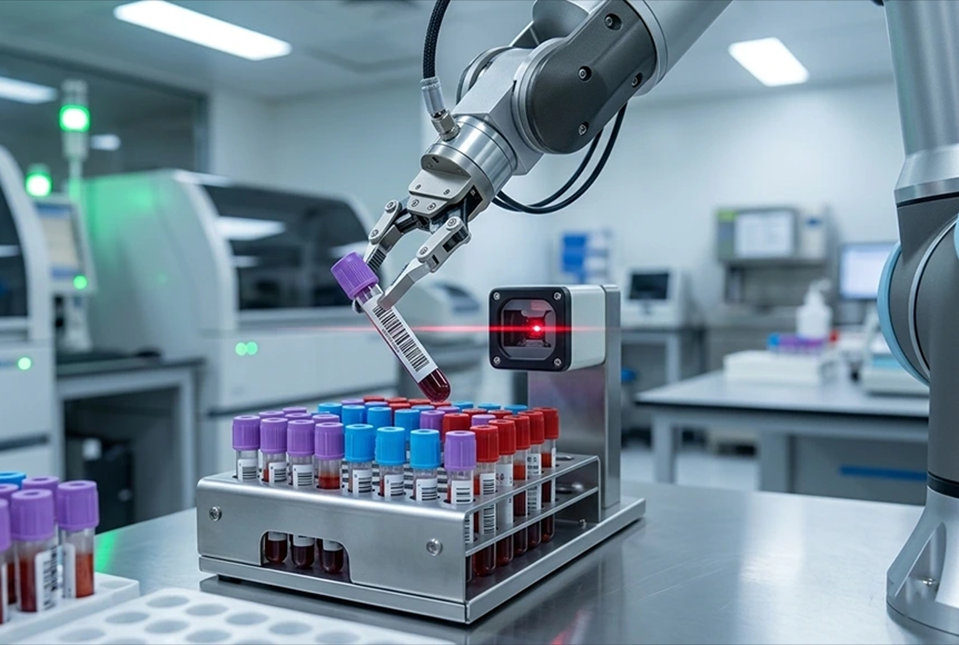
Weill Cornell Medicine researchers have designed an AI system that could help clinical laboratories identify problems before they disrupt testing and delay patient care. These laboratories analyze samples such as blood, urine, tissue or other bodily fluids to help doctors diagnose and treat diseases. However, growing test volumes, workforce shortages and increasingly complex diagnostics are placing mounting demands on laboratory operations.
In a perspective published Oct. 28 in npj Health Systems, the researchers describe Laboratory Agentic Reasoning and Integrative Analytics (LabARIA), one of the first frameworks using several specialized AI tools called agents to help monitor laboratory quality and operations more efficiently.

Dr. Fei Wang
“Laboratory medicine is a critical but largely neglected area, especially considering the AI work already done in radiology and pathology,” said senior author Dr. Fei Wang, associate dean for artificial intelligence and the Frances and John Loeb Professor of Medical Informatics in the Department of Population Health Sciences at Weill Cornell.
Existing AI algorithms developed for laboratory medicine are fragmented and largely confined to task-specific silos, the authors write. LabARIA is designed to integrate these capabilities, allowing the system to identify patterns across different aspects of laboratory operations that individual tools might miss.
The proposed framework would connect to existing laboratory information systems and other databases rather than replace them. A central AI “data coordinator” would route information to specialized AI agents that monitor specimen quality, testing turnaround times, analytical quality control, instrument performance and regulatory compliance. Other agents would forecast inventory and staffing needs.

Dr. He Sarina Yang
“This framework can identify anomalies and pull data together to help lab personnel investigate and address problems earlier,” said lead author Dr. He Sarina Yang, associate professor of clinical pathology and laboratory medicine at Weill Cornell and medical director of clinical chemistry and toxicology laboratory at NewYork-Presbyterian/Weill Cornell Medical Center. “Improving laboratory quality and efficiency with AI can benefit healthcare delivery.”
Currently, lab staff run checks several times a day and retrospectively troubleshoot potential analytical issues when results violate established quality-control rules, Dr. Yang said. LabARIA could potentially identify concerning trends before they trigger a formal quality-control violation, such as changes in performance associated with reagents or other testing materials.
Problems can also arise before testing begins, when specimens are compromised during collection, handling or transportation. LabARIA could help identify patterns in specimen-quality indicators that warrant investigation. Earlier intervention could help prevent disruptions and delays in reporting results.
“AI is a good fit for clinical laboratories because of their structured workflow and established quality-control procedures, but human oversight is central to the design,” Dr. Wang said. The framework has built-in accountability, including traceable data records and reasoning behind recommendations, so laboratory professionals can override the system when necessary.
Since LabARIA is still a conceptual framework, the research team will run experiments using retrospective lab data to fine-tune the system. “Once we’ve got convincing evidence, we can discuss implementing the system in our clinical lab,” Dr. Wang said. “Even after deployment, we will continue to monitor the system to make sure it is running securely and effectively.”
Many Weill Cornell Medicine physicians and scientists maintain relationships and collaborate with external organizations to foster scientific innovation and provide expert guidance. The institution makes these disclosures public to ensure transparency. For this information, please see the profiles for Dr. Fei Wang.

