

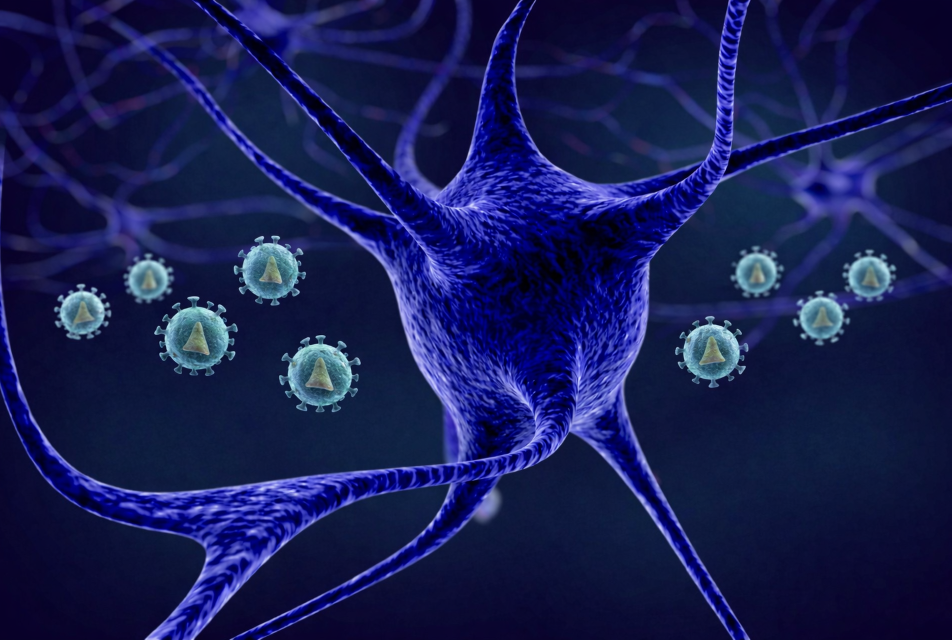
Weill Cornell Medicine and Rutgers Health in New Brunswick have received a four-year, $3 million grant from the National Institute of Mental Health (NIMH) to build the infrastructure and resources that will accelerate discoveries about HIV-associated brain injury. The New York-New Jersey Center for Actionable NeuroHIV Biomarkers (NYJ-CAN-BIO) will provide the expertise, training and latest technologies needed to understand how HIV impacts the brain. This research center could uncover molecular markers that enable new diagnostics and lead to potential therapies for people living with neurological complications related to HIV.

Dr. Lishomwa Ndhlovu
“People don’t often think of HIV as a disease that affects the brain, yet HIV can have profound and lasting effects on brain health and daily functioning, even in the era of effective treatment,” said Dr. Lishomwa (Lish) Ndhlovu, the Herbert J. and Ann L. Siegel Distinguished Professor in Medicine in the Division of Infectious Diseases at Weill Cornell and the center’s co-director. “I’m honored that NIMH has given us the unique opportunity to move cutting-edge research forward that we hope will ultimately transform the lives and care of people with HIV.”
Weill Cornell and Rutgers Health already share an integrated clinical enterprise for advancing HIV/AIDS prevention, therapeutic interventions and clinical trials. “So, it felt natural to build on our strategic partnership to establish a new center focused on HIV and the brain,” Dr. Ndhlovu said.
Dr. Tricia Burdo, associate director of the Rutgers Institute for Translational Medicine and Science and Henry Rutgers Endowed Professor of Translational Medicine, is also co-director of NYJ-CAN-BIO.
"This award is an important recognition of the strength of our collective vision and the value of bringing together complementary expertise across Rutgers, Weill Cornell and the broader New York-New Jersey research community," Dr. Burdo said.
Why the Brain?
Antiretroviral therapy (ART) blocks HIV from replicating and has substantially reduced severe forms of dementia. However, HIV persists in reservoirs in the body, including the brain, often causing complications, such as cognitive and behavioral difficulties, depression and motor impairment.

Dr. Tricia Burdo
“There are still no effective therapies that specifically prevent or mitigate ongoing brain injury,” said Dr. Ndhlovu, who is also a professor of immunology in neuroscience at the Feil Family Brain and Mind Research Institute and a professor of microbiology and immunology at Weill Cornell. “Our goal is to close this critical gap by defining the mechanisms of brain injury and identifying new opportunities for targeted intervention.”
The center will help investigators from a broad range of research fields access shared molecular and computational tools tailored for studying neuroHIV (HIV involvement of the central nervous system). The team will also harness the advanced techniques for culturing human tissues, including methods for growing organoids or “mini brains,” to explore how the virus affects brain cells. Pilot funding will be available to junior investigators and investigators new to HIV research across the two institutions.
“Once the program is established, the team will seek additional funding to grow the center into a complete mental health hub for people with HIV across our two regions,” said Dr. Ndhlovu.

