


A 2023 video honors Dr. Julianne Imperato-McGinley's storied career.
As a new endocrinology fellow at what is now Weill Cornell Medicine in the early 1970s, Dr. Julianne Imperato-McGinley hit a wall.
Her first assignment was to write a grant proposal, something she had never done. Over many months, she agonized over every word, tossing many revisions in the trash. Finally, Dr. Imperato-McGinley told her chief she simply couldn’t do it, that he’d picked the wrong person for the job. But he had discovered her almost-daily versions of the document in the wastebasket, fishing them out. “How about sending your version 23?” he asked with a wry smile.
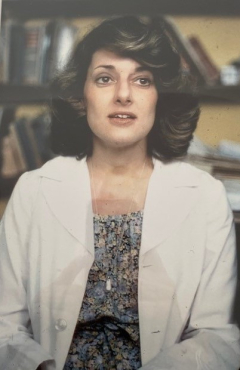
Dr. Imperato-McGinley as an endocrinology fellow at Weill Cornell in 1972.
She did—and the rest, as they say, is history. The grant, which funded groundbreaking endocrinology research that discovered a new clinical entity and led to therapies used worldwide, launched Dr. Imperato-McGinley’s glittering 50-year career as a visionary in her field and leader of the preeminent translational research enterprise at Weill Cornell Medicine. As founding director of the Clinical and Translational Science Center (CTSC), she has garnered continuous federal funding of four continuous awards grants over 20 years totaling more than $200 million—each grant a record at the institution. Her leadership has transformed the research landscape at Weill Cornell through the establishment of a robust infrastructure.
The same persistence displayed at the start of her career has propelled her throughout. “That is my personality, good or bad. I can’t give up,” said Dr. Imperato-McGinley, also associate dean for translational research and educational training and the Abby Rockefeller Mauzé Distinguished Professor of Medicine in Endocrinology. “You have to be obsessive or you won’t get anything.”
Setting the Stage
Dr. Imperato-McGinley’s interest in medicine dates back to childhood summers spent at the library. She was immediately captivated by a book about Dr. Elizabeth Blackwell, the first female physician in the United States, whose brainchild, the Women’s Medical College of the New York Infirmary, later became part of Weill Cornell Medicine. “I thought, ‘How cool. Look at her. I want to do what she did,’” Dr. Imperato-McGinley recalled.
As one of only eight women in her class of approximately over 100 medical students at SUNY Downstate College of Medicine, she braced for discrimination—but instead found support from her colleagues. The buoying experience only fueled her determination not to allow gender to define her ambitions.
During her time as an endocrinology fellow, Dr. Imperato-McGinley quickly developed an unusual approach to scientific discovery: She began her inquiries with patients and communities rather than laboratory questions.

Village in the Dominican Republic where Dr. Imperato-McGinley set up a clinic in 1982.
That paradigm fueled her landmark early work following a community in the Dominican Republic, where she identified a rare, inherited deficiency of the enzyme 5-alpha reductase that causes genetically male children to appear female at birth and then masculinize at puberty. The enzyme is responsible for transforming testosterone to dihydrotestosterone (DHT). The hormone DHT is essential for the formation of external male genitalia as well as the prostate gland. Carefully evaluating the patients further, Dr. Imperato-McGinley also found that these men never developed baldness or prostate enlargement.
That discovery, published in Science in 1974, resulted in the development of finasteride, which comprises two blockbuster drugs used to treat benign prostatic hyperplasia and male pattern baldness. Further studies of the patients also transformed the universally held view that a person’s gender identity is not solely socially acquired—which initially prompted controversy but is now included in standard textbooks of endocrinology, psychology, urology and medicine.
“Most research goes from bench to bedside to community,” said Dr. Imperato-McGinley, who was also chief of the Division of Endocrinology, Diabetes and Metabolism for 25 years. “I go from community back to bench to figure out why.” Under her leadership, the division grew from just one physician to a group of 26. She was also the first physician and first woman at Weill Cornell to have her research drive the development of one of the world's leading drugs.
From Innovator to Leader and Mentor
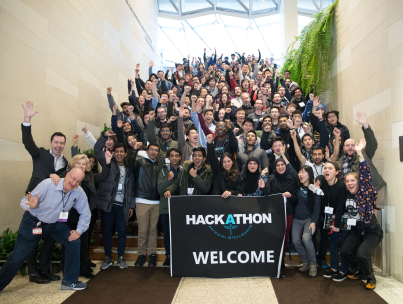
Dr. Imperato-McGinley, far left, joined by participants of the 2020 Health Hackathon. The annual CTSC event brings together teams of medical, business, engineering and design students and faculty members to collaborate on projects that tackle pressing health issues.
The second half of her career increasingly shifted from personal scientific discovery to institution-building. The CTSC resulted from yet another request to seek funding—this one from Dr. Antonio Gotto, Jr., then dean of Weill Cornell Medicine. Dr. Gotto asked Dr. Imperato-McGinley in 2005 to apply for a large National Institutes of Health grant for a Clinical Translational Science award.
“It was a natural direction for me, not only identifying connections between scientific questions and collaborators and patients, but also finding new ways to support the next generation of clinical researchers,” she recalled. At the time, Dr. Imperato-McGinley was also director of Weill Cornell’s General Clinical Research Center and had developed a master’s program in clinical investigation, which was a key requirement of the grant.
Her efforts were wildly successful, securing four grants with continuous funding for the CTSC over 20 years, which totaled over $200 million and were the largest grants ever received by the institution. A multi-institutional center was built that aims to accelerate new patient preventive interventions and treatments through translational research.

Dr. Imperato-McGinley in 1994 with Dr. E. Darracott Vaughan Jr, right, then chair of Weill Cornell's Department of Urology, and a patient.
In the process, Dr. Imperato-McGinley has launched the careers of more than 5,000 investigators, who themselves have been awarded hundreds of grants totaling more than $55 million and published thousands of journal articles. She imprints early-career researchers with her enduring philosophy: Innovation requires disruption and collaboration is essential.
Dr. Imperato-McGinley speaks about these achievements—for which she received the 2023 Joan and Sanford I. Weill Exemplary Achievement Award—with as much pride and enthusiasm as her own scientific discoveries, considering mentorship “as exciting as my own work.”
“The CTSC offers a road map to these students, a way to get there,” she said. “Today, our interdisciplinary teams spark novel ideas and promote disruptive thinking. It is this collaboration that is closing the chasm between the bench scientist and the clinical researcher to bring new and relevant therapies to patients.”

