


Dr. Dhruv Khullar, an associate professor of population health sciences and of medicine at Weill Cornell Medicine, has been selected as an Emerging Leader in Health and Medicine (ELHM) Scholar by the National Academy of Medicine.
The program, which launched in 2016, is designed to increase the organization’s engagement with outstanding interdisciplinary early- to mid-career professionals. NAM selects up to 10 people working in biomedical science, population health, health care, health policy and related fields each year. Scholars participate in leadership training and mentoring and help shape the priorities and work of NAM during their three-year tenures.
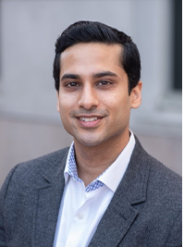
Dr. Dhruv Khullar
For Dr. Khullar, this honor recognizes his work at the intersection of patient care, health services research, public policy and communications. His career has focused not only on caring for patients, but also better understanding the factors that shape how care is delivered. His goal: making sure that all patients receive high-quality care regardless of their socioeconomic and demographic background and allowing the doctor-patient relationship to thrive.
“I’ve always wanted to understand not just medicine, but all the forces around medicine —social, economic, political — that influence the way that we care for people,” Dr. Khullar said.
As a second-generation physician who is also a researcher and writer, Dr. Khullar focuses on what’s shaping modern health care. His work comprises everything from how doctors and health systems are paid, how consolidation affects care delivery, how professional satisfaction affects patient and clinician well-being, and how to build trust among clinicians, patients and communities.
Dr. Khullar is also interested in exploring the risks and opportunities of artificial intelligence in medicine, especially around physician burnout. AI, he believes, has the power to reduce administrative burden while improving clinical decision-making.
“What ties all of my research together is trying to understand and align incentives in healthcare in such a way that we can bring about conditions that promote high quality, compassionate care,” he said.
Indeed, as medicine continues to be reshaped by technological, political and cultural forces, as well as “deep distrust” of institutions, this work will only become more crucial, he said. Working at Weill Cornell has given him the freedom, support and ability to do just that, he added.
“Weill Cornell has been so supportive of the work that I do, and it has really given me the gift of exploring my curiosity,” he said. “A lot of my work is focused on trying to understand the future of medicine, including the disparate ways in which AI, GLP-1 drugs, payment reforms and climate change are changing medicine.”
Dr. Khullar said he is especially excited about the opportunity to engage with other scholars in the NAM program—to build collaboration and community around some of the most pressing issues facing health care professionals.
“I’ve always been someone who learns best through conversation and the exchange of ideas,” he said. “My hope is that my research and writing help to paint a picture of where we need to go and what we can to do to bring about a system that works better for everyone.”

