

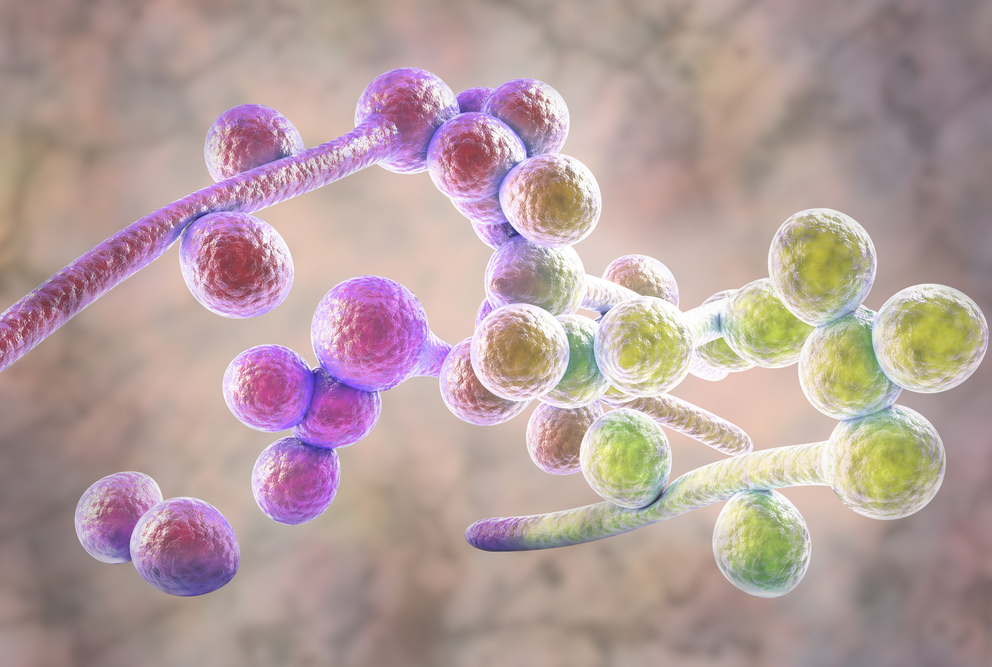
A commonly used systemic antifungal medication may help reduce symptoms in a subset of patients with inflammatory bowel disease (IBD) by restoring a healthier gut microbiome, according to a preliminary study by Weill Cornell Medicine investigators.

Dr. Iliyan Iliev
The study, published Sept.1 in Nature Medicine, provides what is thought to be the first evidence that targeting intestinal fungal dysbiosis can reshape bacterial and fungal microbiome dynamics in patients with IBD and establishes a framework for mycobiome-guided precision therapies. It compared the effects of two weeks of treatment with the antifungal mouthwash nystatin or the systemic antifungal medication fluconazole in 53 patients already receiving standard therapies for mild to moderate IBD who had an oral fungal infection called thrush.
The prospective observational study IVAN (IBD Therapy Via Antifungal-driven Microbiota Normalization) enrolled 53 patients with mild-to-moderate Crohn's disease or ulcerative colitis and mild oral thrush who were receiving routine clinical care at Weill Cornell Medicine and the Jill Roberts Center for Inflammatory Bowel Disease at NewYork-Presbyterian/Weill Cornell Medical Center. Patients who received fluconazole, an antifungal medication that acts systemically and throughout the gastrointestinal tract, but not oral nystatin wash, which acts locally in the mouth, experienced improved IBD symptoms and a healthier gut microbial community after treatment. These changes led to increased bacterial diversity, enhanced butyrate production and improved clinical disease activity.
“These results highlight the potential of a microbiome-based approaches to restore a balanced microbial community in the gut,” said Dr. Iliyan D. Iliev, professor of immunology in medicine and co-director of the microbiome core laboratory at the Jill Roberts Institute for Research in Inflammatory Bowel Disease at Weill Cornell Medicine. “Upon reducing intestinal Candida burden, we observed recovery of some beneficial bacteria, restored production of microbial metabolites associated with intestinal health and improvements in clinical disease activity. These findings support the concept that disease-associated fungi play a role in the pathogenesis of inflammatory bowel disease in some patients.”

Dr. Ellen Scherl
The study is the result of more than a decade of research by Dr. Iliev’s laboratory on how fungal organisms in the gastrointestinal tract interact with the immune system and the overall gut microbiota. Through close collaboration with his clinical colleague, Dr. Ellen Scherl, the founding director of the Jill Roberts Center for Inflammatory Bowel Disease at Weill Cornell Medicine and NewYork-Presbyterian, Dr. Iliev has shown that some patients with IBD and related conditions have an intestinal overgrowth of the fungus Candida albicans. Previous studies from the laboratory demonstrated that certain strains of Candida albicans produce candidalysin, a toxin capable of damaging intestinal epithelial cells and triggering inflammatory immune responses that contributes to worsening symptoms. In mouse models, Iliev and his team have shown that Candida overgrowth can hamper the effects of anti-inflammatory IBD medications because the immune system ramps up inflammation to fight the fungal infection.
“In this context, the gut fungi can work against you,” said Dr. Xiangyu Pan, a postdoctoral associate and first author of the study. “Overgrowth of fungi and a toxin they produce may affect how a disease progresses and how a patients respond to treatment.”

Dr. Xiangyu Pan
Treating the fungal overgrowth, the team hypothesized, might reduce symptoms. But first they had to decide which patients might benefit. The researchers discovered that genetically related Candida albicans strains were often shared between the oral cavity and the gastrointestinal tract of the same patient.
They learned that a simple cheek swab worked because the fungi in the mouth mirror those in the gut. IBD patients with thrush were treated with nystatin or fluconazole to clear the oral fungal infection, so the study leveraged this patient population to assess the effects on IBD symptoms and gut microbiota.
Although both antifungal therapies resolved oral thrush, only fluconazole effectively reduced intestinal Candida burden and triggered broad remodeling of the gut microbiome with durable changes that persisted weeks after treatment.
In addition to microbiome improvements, patients receiving fluconazole were more likely to experience reductions in disease activity scores and had a lower probability of disease progression during the eight-week follow-up period.
While the study was not designed to establish therapeutic efficacy and was not randomized or placebo-controlled, the findings support further testing of antifungal co-therapy in biomarker-selected patient populations. The next step will be a larger, multicenter placebo-controlled trial to confirm the results, said Dr. Scherl, who is also a gastroenterologist at NewYork-Presbyterian/Weill Cornell Medical Center. They would also like to determine if patients without thrush who have a positive cheek swab for Candida would also benefit.
If their future studies are successful, fungal- or other microbiome-targeted therapies may help prevent the progression of diseases affecting the gut and may help reduce the need for immune-suppressing medications, which may increase the risk of infections or cancer.
“If we can modulate immune-mediated inflammation by understanding and targeting the gut fungal regulators, we might be able to favorably impact the natural progression of inflammatory bowel disease, both Crohn's disease and ulcerative colitis,” Dr. Scherl said. “Further studies are warranted to determine what subtype of inflammatory bowel disease would respond best. This is a start.”
Many Weill Cornell Medicine physicians and scientists maintain relationships and collaborate with external organizations to foster scientific innovation and provide expert guidance. The institution makes these disclosures public to ensure transparency. For this information, please see the profiles for Dr. Ellen Scherl and Dr. Iliyan Iliev.
This research was supported in part by the U.S. National Institutes of Health through grant numbers R01DK113136, R01DK121977, R01AI198729, R01CA286920, R01AI163007, R01AI178683. Additional support was provided by the Leona M. and Harry B. Helmsley Charitable Trust, the Irma T. Hirschl Career Scientist Award, the Research Corporation for Science Advancement, the Kenneth Rainin Foundation Innovator Award, the Burroughs Wellcome Fund Investigator in the Pathogenesis of Infectious Disease (PATH) Award and the Cancer Research Institute Lloyd J. Old STAR Award.

