

A $1 million Research Scholar Grant from the American Cancer Society will help a multi-institution team led by Dr. Bishoy Faltas, associate professor of medicine at Weill Cornell Medicine, to develop new therapy combinations for hard-to-treat urinary tract cancers.
New therapies combining enfortumab vedotin and pembrolizumab dramatically improved outcomes for patients with advanced cancers of the cells lining the urinary tract and bladder. Yet about one-third of patients do not respond to this therapy. Additional options are urgently needed. Dr. Faltas and his colleagues are exploring novel combination therapies to help address this gap.
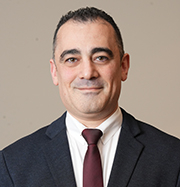
Dr. Bishoy Faltas
“Our work has the potential to transform our understanding of how inherited genetic alterations and tumor-acquired mutations cooperate to disrupt DNA repair and drive cancers of the urinary tract,” said Dr. Faltas, who is also the chief research officer at the Englander Institute for Precision Medicine and a member of the Sandra and Edward Meyer Cancer Center at Weill Cornell Medicine and an oncologist at NewYork-Presbyterian/Weill Cornell Medical Center.
Other members of the team include Weill Cornell Medicine investigators Dr. Olivier Elemento, director of the Englander Institute for Precision Medicine, and Dr. Zhengming Chen, an assistant professor of population health sciences. Dr. John Lee, a medical oncologist at UCLA, Dr. Kent Mouw, an associate professor of radiation oncology at Harvard Medical School, and Dr. Matthew Schiewer, a clinical development manager at Myriad Genetics, are also contributing.
Untapped Targets
The research focuses on an underexplored question in urinary tract cancer biology. While most efforts in the field concentrate on mutations that develop during a patient’s lifetime, about 10% to 20% of patients also carry inherited cancer-predisposing mutations, including alterations in DNA repair genes such as BRCA1 and BRCA2. These inherited mutations may interact with tumor-acquired mutations in ways that accelerate cancer development and shape treatment response.
Dr. Faltas and his colleagues will study how these two classes of mutations work together to drive tumor growth and therapeutic resistance.
The team will use an innovative mouse model that allows them to more quickly assess how interactions between different inherited and spontaneous mutations contribute to urinary tract cancers and test new therapies. Cells from the patient samples will be used to grow mini-bladder organoids harboring these germline-somatic interactions, which the team can use to test personalized therapies. The team also hopes to identify biomarkers that will help them select the best therapy combinations for individual patients.
“Our study will uncover how inherited genetic changes and mutations that arise in tumors work together to create vulnerabilities in bladder cancer that can potentially be targeted with new precision treatments,” Dr. Faltas said.

