News and Events

Programs and providers of Obstetrics and Gynecology at Weill Cornell Medicine are often the focus of news stories and features appearing in major national media. We invite you to review some stories that typify the breakthrough accomplishments of our remarkable team and highlight the impact our care has had on patient’s lives.

Permanent Birth Control Methods for Women Have Up to Six Percent Failure Rates

pregnancy test laying on a wooden surface

Hysteroscopic sterilization, a nonincisional procedure, was found to be as effective as minimally invasive laparoscopic sterilization in preventing pregnancy, but both methods had higher than expected failure rates, according to a new study led by an investigator at Weill Cornell Medicine. 

The comparative study, published April 12 in Fertility and Sterility, found that both methods had failure rates of five to six percent at 5 years post-procedure. Dr. Aileen Gariepy conducted the investigation while at Yale School of Medicine; she is now director of complex family planning in the Department of Obstetrics and Gynecology at Weill Cornell Medicine. Co-investigators included Dr. Eleanor Bimla Schwarz from the University of California, San Francisco and University of California, Davis, and Dr. Diana Zuckerman from the National Center for Health Research.

Dr. Aileen Gariepy

Dr. Aileen Gariepy

Anti-Müllerian Hormone May Contribute to Infertility in Polycystic Ovary Syndrome

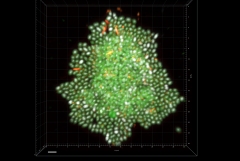
microscopic image of ovarian follicle

High levels of anti-Mullerian hormone (AMH) have traditionally been thought of as merely a passive byproduct of polycystic ovary syndrome (PCOS), but a new preclinical study by Weill Cornell Medicine researchers suggests that the hormone plays an active role in the disorder and may contribute to problems with ovulation and fertility.

In the study, published March 9 in Science Advances, the investigators discovered that AMH may cause follicles, the multicellular, fluid-filled sacs that contain developing eggs in the ovary, to mature too quickly.

“AMH is routinely measured in the clinic to give an indication of how many follicles a woman has growing in her ovaries, and this value is often high in women with PCOS. But no one has ever determined whether a high level of AMH, by itself, can have a negative influence,” said senior author Dr. Daylon James, assistant professor of stem cell biology in obstetrics and gynecology and in reproductive medicine at Weill Cornell Medicine. “A better understanding of the root causes of PCOS is critical to mitigating the condition’s many health consequences.”

Researchers Identify Key Regulator of Blood Stem Cell Development

red and white blood cells.

A protein that masterminds the way DNA is wrapped within chromosomes has a major role in the healthy functioning of blood stem cells, which produce all blood cells in the body, according to a new study from researchers at Weill Cornell Medicine.

The protein, known as histone H3.3, organizes the spool-like structures around which DNA is wrapped in plants, animals and most other organisms. Histones enable DNA to be tightly compacted, and serve as platforms for small chemical modifications—known as epigenetic modifications—that can loosen or tighten the wrapped DNA to control local gene activity.

The study, which appeared Dec. 27 in Nature Cell Biology, examined H3.3’s role in blood stem cells, also known as hematopoietic stem cells (HSCs), that are a major focus of efforts to develop stem-cell-based medicine. Normally most HSCs stay in a stem-like, uncommitted state where they can survive long-term, slowly self-renewing, while some HSCs mature or “differentiate” to produce all the different lineage-specific blood cell types. The study found that H3.3 is crucial for both processes; deleting the protein from HSCs led to reduced HSC survival, an imbalance in the types of blood cell produced by the HSCs and other abnormalities.