News and Events

Programs and providers of Obstetrics and Gynecology at Weill Cornell Medicine are often the focus of news stories and features appearing in major national media. We invite you to review some stories that typify the breakthrough accomplishments of our remarkable team and highlight the impact our care has had on patient’s lives.

Looking Beyond Beta-Amyloid: New Paths in Alzheimer's Research

Helen and Robert Appel Institute Symposium

At the 12th annual Helen and Robert Appel Alzheimer’s Disease Research Institute Symposium, scientists and clinicians shared their latest research which is advancing how Alzheimer’s disease is diagnosed and treated. Held at Weill Cornell Medicine’s Griffis Faculty Club, the symposium gave investigators and community members the opportunity to learn and ask questions about new directions in neurodegenerative research. Alzheimer’s disease affects more than 7 million Americans, a number expected to increase to 13 million by 2050.

Helen and Robert Appel established the Institute in 2006, prompted to action when two close friends succumbed to the disease two decades ago. “We were determined to do whatever we could to make a dent in Alzheimer’s research,” said Helen Appel of her and her late husband Bob’s commitment to helping find a cure. “We’re going to have to come up with solutions to the problems, and we’ll do it.”

Switch to Experimental Drug after Liquid Biopsy Detection of Breast Cancer Recurrence Improves Outcomes

researcher holding a vial of blood over a rack of vials

A large prospective, randomized clinical trial in patients with advanced breast cancer has found that the use of liquid biopsy blood tests for early detection of a treatment-resistance mutation, followed by a switch to a new type of treatment, substantially extends the period of tumor control compared to standard care.

The SERENA-6 study, published June 1 in the New England Journal of Medicine and presented concurrently at the annual meeting of the American Society for Clinical Oncology, was conducted at multiple medical centers, principally in Europe, East Asia and the United States, including at Weill Cornell Medicine and three affiliated NewYork-Presbyterian campuses: NewYork-Presbyterian/Weill Cornell Medical Center, NewYork-Presbyterian Brooklyn Methodist Hospital, and NewYork-Presbyterian Queens. It is one of the first demonstrations that treatment switching guided by liquid biopsy results brings better outcomes for patients.

“The main message here is that liquid biopsy technology allows us to intervene sooner when the tumor burden is lower and the chance of a good outcome is higher,” said study co-author Dr. Massimo Cristofanilli, professor of medicine at Weill Cornell Medicine and an oncologist at NewYork-Presbyterian/Weill Cornell Medical Center.

Study Provides New Insights into the Genetic Complexity of Cancer Metastasis

illustration of DNA double helix and chromosomes

When cancer spreads from a primary tumor to new sites throughout the body, it undergoes changes that increase its genetic complexity.

A new study from researchers at Weill Cornell Medicine and Memorial Sloan Kettering Cancer Center (MSK) provides fresh insights about how cancers evolve when they metastasize — insights that could aid in developing strategies to improve the effectiveness of treatment.

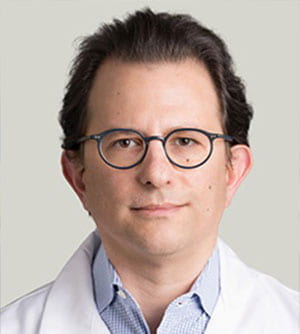
Dr. Xi Kathy Zhou

Dr. Xi Kathy Zhou